Political partition of Kurdistan
Abstract
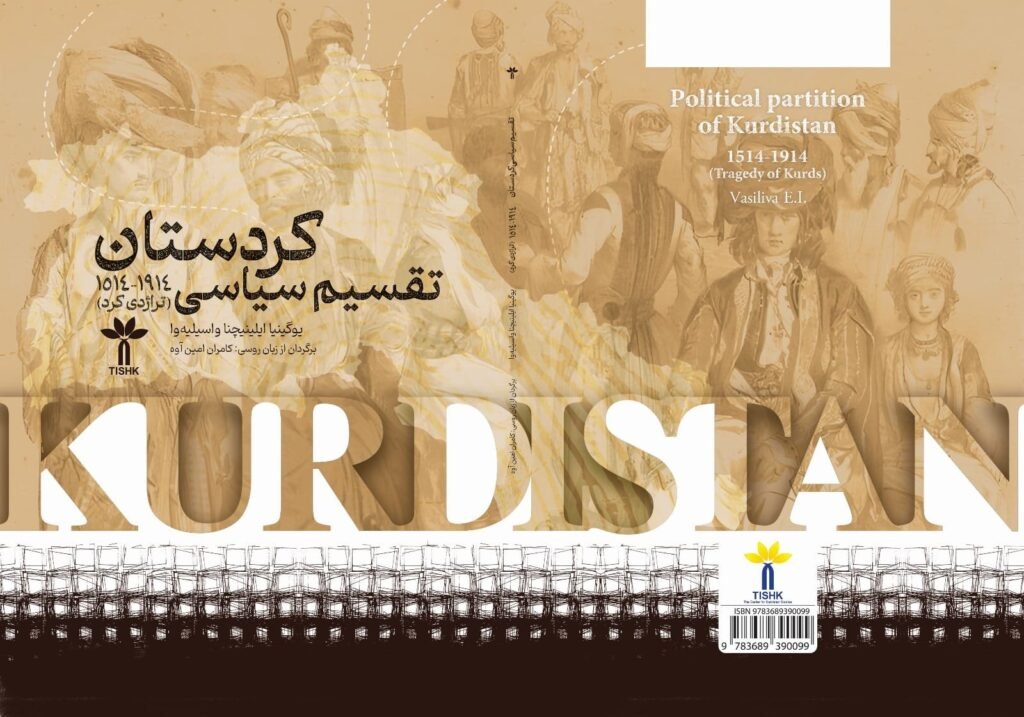
The political partiton of Kurdistan, initiated by the Ottoman-Safavid battle of Çaldıran in 1514, shaped the region’s destiny for centuries. Vasiliva E.I.’s Political Partition of Kurdistan 1514–1914 examines the historical processes that led to the fragmentation of Kurdish lands between the Ottoman and Safavieh empires. The book highlights how this division was not merely a consequence of imperial conflicts but a deliberate geopolitical strategy to undermine Kurdish unity. Drawing on historical sources, the author traces the struggles of Kurdish rulers, the impact of shifting allegiances, and the suppression of Kurdish identity. She explores the role of key figures such as Emir Sharaf Bidlisi and Idris Bidlisi, and the long-term consequences of treaties like the 1639 Zohab Agreement, which formalized Kurdistan’s division. The study reveals how the imposed borders disrupted Kurdish socio-economic structures, affecting peoples, emirates, and cultural development. This seminal work, now translated into Kurdish by Dr. Kamran AminAve and published by the TISHK Center for Kurdistan Studies, offers a critical historical perspective on the partition that continues to define Kurdish geopolitics today.
Publication record
- Author
- Vasiliva E.I.
- Translator
- Kamran AminAve
- Type
- Book
- Publisher
- TISHK Center for Kurdistan Studies
- Editor
- TISHK Center for Kurdistan Studies
- Date
- 25/02/2025
- DOI
- https://doi.org/10.69939/TISHK0014
- ISBN
- 978-3-68939-008-2
- e-ISBN
- 978-3-68939-009-9
- Language
- English and Kurdish
- Pages
- 1 – 143
Vasiliva E.I. (2025). Political partition of Kurdistan. TISHK Center for Kurdistan Studies. https://doi.org/10.69939/TISHK0014
TISHK Book
Political partition of Kurdistan
Published by TISHK Center for Kurdistan Studies: 25 February 2025
https://doi.org/10.69939/TISHK0014
Abstract
The political partiton of Kurdistan, initiated by the Ottoman-Safavid battle of Çaldıran in 1514, shaped the region’s destiny for centuries. Vasiliva E.I.’s Political Partition of Kurdistan 1514–1914 examines the historical processes that led to the fragmentation of Kurdish lands between the Ottoman and Safavieh empires. The book highlights how this division was not merely a consequence of imperial conflicts but a deliberate geopolitical strategy to undermine Kurdish unity. Drawing on historical sources, the author traces the struggles of Kurdish rulers, the impact of shifting allegiances, and the suppression of Kurdish identity. She explores the role of key figures such as Emir Sharaf Bidlisi and Idris Bidlisi, and the long-term consequences of treaties like the 1639 Zohab Agreement, which formalized Kurdistan’s division. The study reveals how the imposed borders disrupted Kurdish socio-economic structures, affecting peoples, emirates, and cultural development. This seminal work, now translated into Kurdish by Dr. Kamran AminAve and published by the TISHK Center for Kurdistan Studies, offers a critical historical perspective on the partition that continues to define Kurdish geopolitics today.

- Place of publication:Bonn, Germany
- Author/Contributor: Vasiliva E.I.
- Translated from Russian by: Dr. Kamran AminAve
- Institution: TISHK Center for Kurdistan Studies
- Language: Kurdish
- ISBN (Print) 978-3-68939-008-2
- ISBN (Online) 978-3-68939-009-9
- DOI: 10.69939/TISHK0014
- ISSN:
- E-ISSN:
-
Copyright: © 2025 by TISHK Center for Kurdistan Studies is licensed under CC BY-NC 4.0