17 December – Peshmerga Day and Kurdistan Flag Day
17 December occupies a central place in the modern political memory of the Kurdish people. It marks both the first public hoisting of the Kurdistan flag in Mahabad in 1945 and its later designation as Peshmerga Day and Kurdistan Flag Day. This institutional recognition was formalized through a resolution of the Kurdistan Regional Parliament (Resolution No. 48 of 19 June 2004), which officially declared 17 December as Kurdistan Flag Day. The convergence of these two commemorations highlights the inseparable relationship between national symbols and the organized struggle for political existence, collective dignity, and the right to self-determination.
The Emergence of the Kurdistan Flag
The modern national flag of Kurdistan was first introduced by leading figures of the Xoybûn (Kurdish: Xoybûn, “Independence”) movement. It emerged in the context of the collapse of the Ottoman Empire and was intended to represent the Kurds in their political struggle for national self-determination. The flag was presented to international delegates at the Paris Peace Conference and linked to the provisions of the Treaty of Sèvres (1920), which envisaged a political framework for Kurdistan.
Under this flag, Xoybûn proclaimed the first Kurdish government-in-exile in 1927 and waged a prolonged armed struggle until 1932 in an effort to restore Kurdish independence, which had been lost since the mid-nineteenth century. Already during this period, the flag became established as a lasting symbol of political continuity and national resistance.
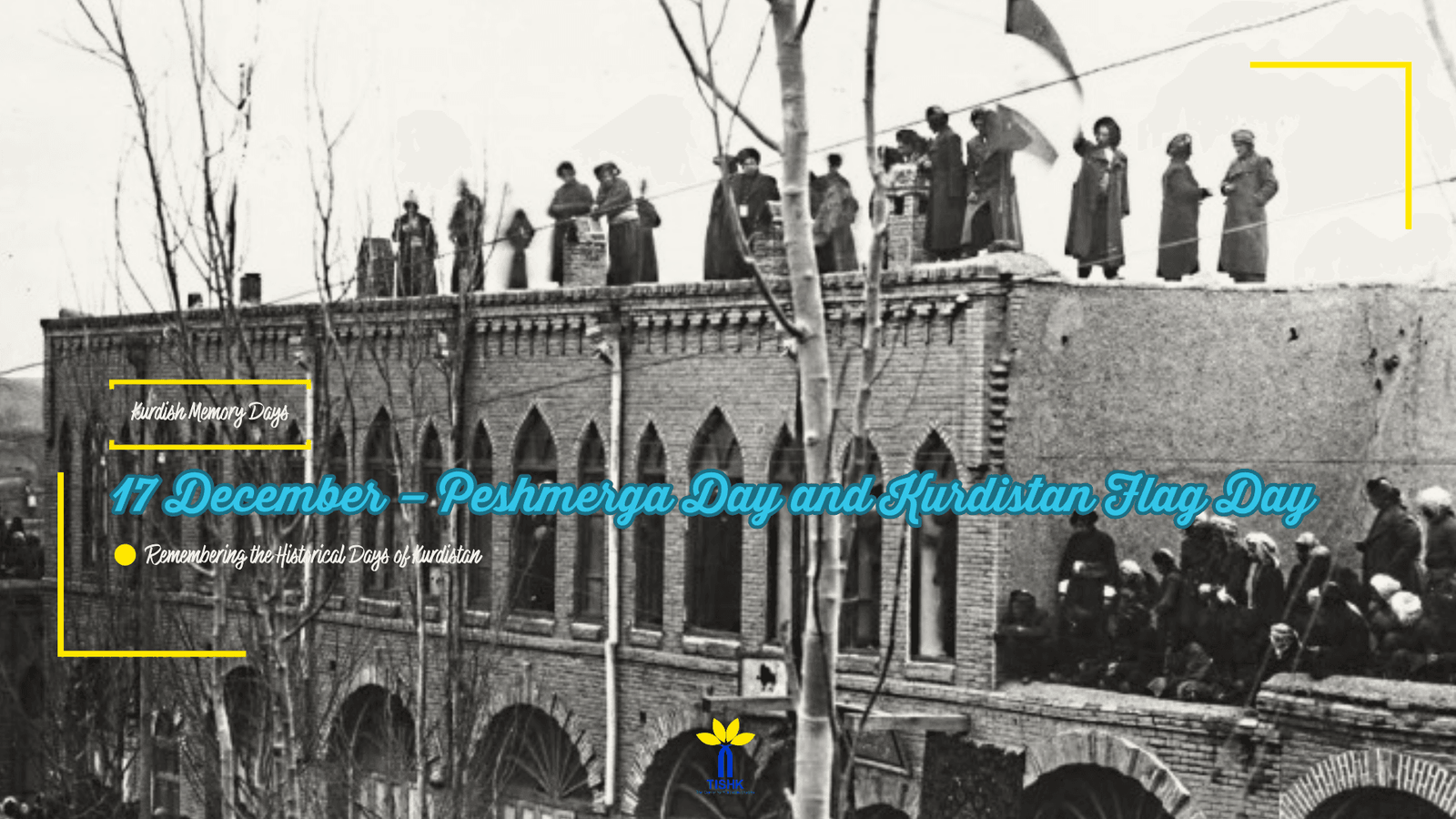
A decisive historical moment was reached on 17 December 1945, when the Kurdistan flag was publicly raised for the first time in the city of Mahabad. Shortly thereafter, in 1946, the parliament of the Republic of Kurdistan in Mahabad – formed under the leadership of the Kurdistan Democratic Party – officially adopted the flag as the state symbol, thereby granting it institutional legitimacy.
Structure and Symbolism of the Flag
The Kurdistan flag consists of a horizontal tricolour field in red, white, and green, with a golden sun emblem at its center. The sun features 21 rays of equal size, a number of fundamental significance in Kurdish religious and cultural traditions. The precise central placement of the emblem emphasizes symbolism of balance, unity, and historical continuity.
Beyond its visual design, the flag embodies a multilayered political and cultural meaning. It has been adopted by various Kurdish movements and organizations and continues to function as a shared national symbol across territorial and political boundaries.
Peshmerga Day and the Defense of National Achievements
Thirty-nine years after the first hoisting of the flag in Mahabad, 26 Sermawez (17 December) was designated as Peshmerga Day in 1984 by the Kurdish liberation movement in Eastern Kurdistan (particularly the Democratic Party of Iranian Kurdistan -PDKI). This decision acknowledged the central role of Kurdish defense forces in the national liberation struggle.
The origins of the Peshmerga date back to the early phase of the Republic of Kurdistan, when the protection of political achievements and territorial control became a fundamental necessity. Conceived as a “national army,” the Peshmerga assumed responsibility for ensuring the political survival of the Kurdish movement. Particularly in the context of Kurdish resistance across all four parts of Kurdistan, the Peshmerga evolved into a key actor of collective self-defense and political endurance.
The Political Significance of 17 December
The temporal convergence of Kurdistan Flag Day and Peshmerga Day reflects a fundamental historical insight: national symbols derive their meaning through their defense, and political achievements can only endure when they are protected. As frequently emphasized in Kurdish political memory, the relationship between people, land, and flag resembles that between mother and child—shaped by attachment, care, and sacrifice. 17 December embodies this relationship in a particularly profound manner.
Concluding Remarks
Within the framework of Kurdish Memory Days, 17 December represents a condensed remembrance of the historical foundations of Kurdish national consciousness. It symbolizes the close interconnection between symbol and struggle, memory and resistance. Commemorating this day is simultaneously an affirmation of the Kurdish people’s enduring pursuit of dignity, equality, and the right to determine their own future.