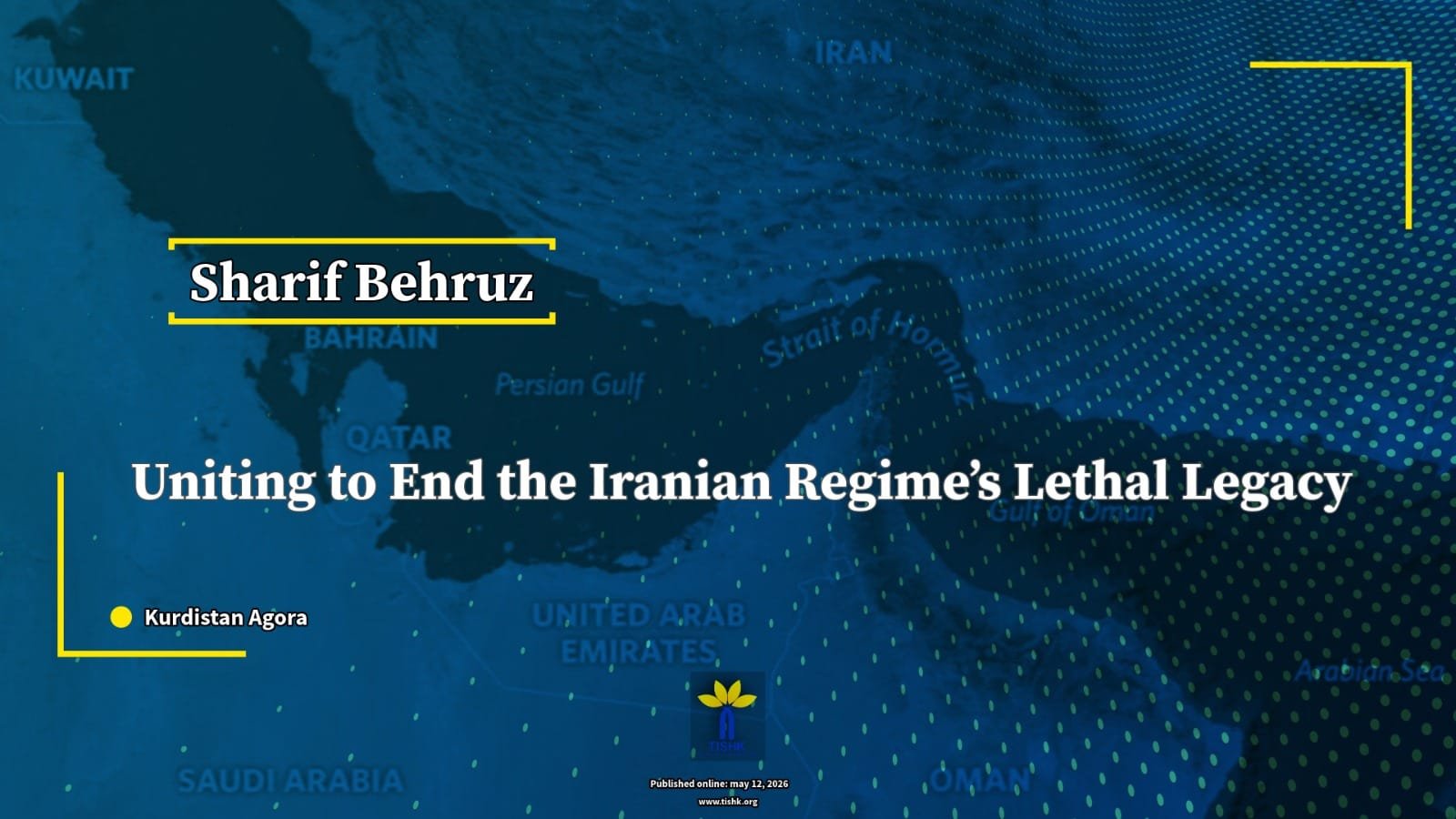
Sharif Behruz
Strategic Policy Analyst and Managing Editor of Kurdistan Agora
Published online by TISHK Center for Kurdistan Studies: Bonn, Germany: 01 March 2026
Summary
The article argues that the February 28, 2026, joint U.S.-Israeli strikes—which eliminated Supreme Leader Ali Khamenei and the IRGC’s top command—represent a deliberate “systemic liquidation” designed to dismantle the Iranian regime’s infrastructure rather than simply forcing it to negotiate. By dismissing both the Monarchist and NCRI blueprints as exclusionary and top-down, the author posits that the only path to long-term stability is a “Grand Bargain” that replaces centralist repression with a decentralized, federalist republic. This shift is validated by recent diplomatic signals from Washington and Jerusalem—specifically Prime Minister Netanyahu’s “Roaring Lion” address to Iran’s diverse nations—which suggest a strategic pivot toward empowering ethnic peripheries like the Kurds to act as “king-makers” and anchors of a new, inclusive union that coexists peacefully with its neighbors.

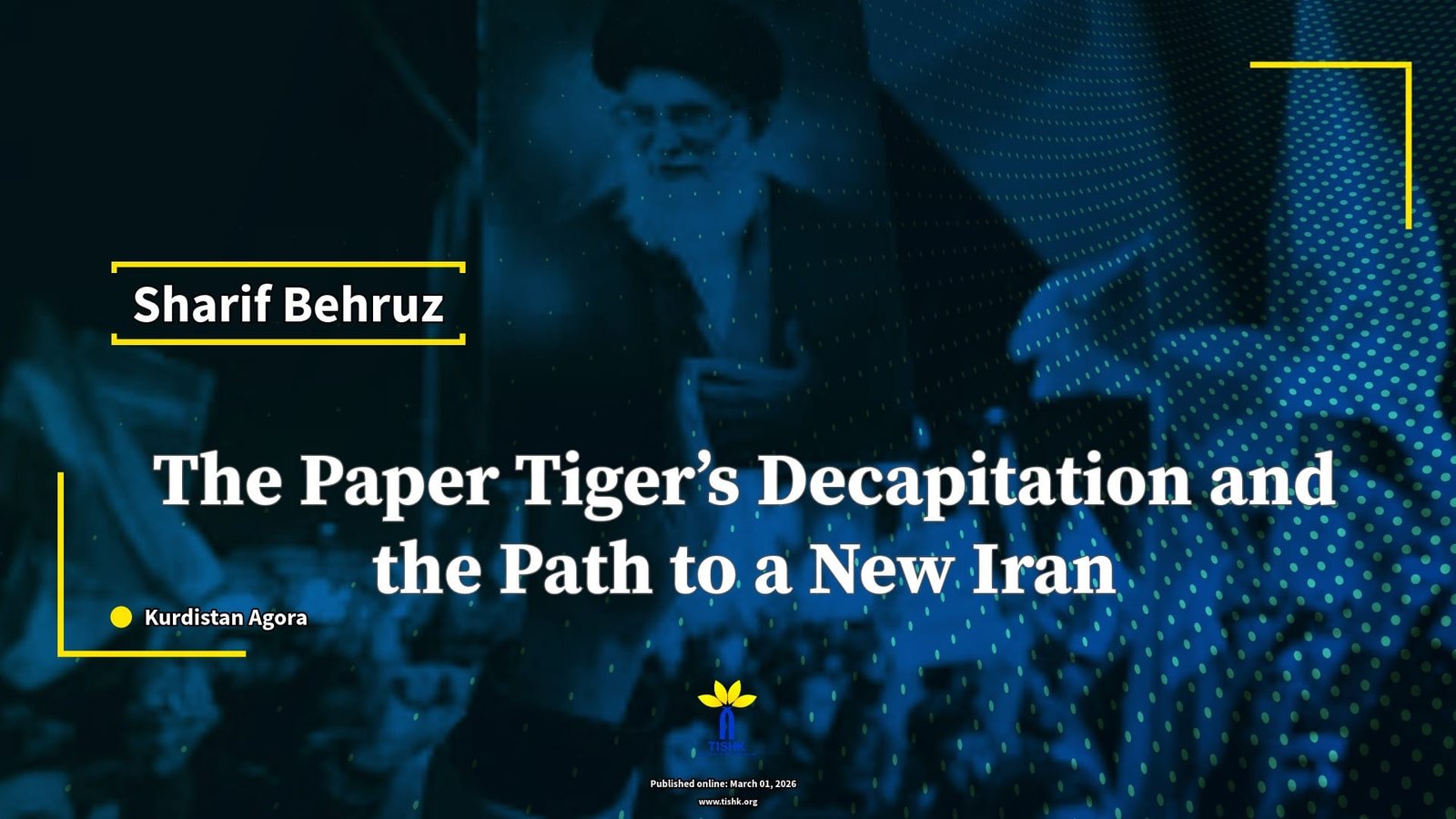
The smoke rising from Tehran on February 28, 2026, marks the beginning of a high-stakes geopolitical gamble. The joint U.S.-Israeli strike, which claimed the life of Supreme Leader Ali Khamenei and dozens of top commanders, has done more than remove a figurehead; it has decapitated the nervous system of a centralized autocracy. The “Iron Fist” that once threatened the region has been revealed as a paper tiger, paralyzed by the loss of its decision-making core.
For years, the regime’s military limits were visible—most notably in the 12-day war, where their only recourse was the indiscriminate firing of missiles. They lacked the conventional depth to match their rhetoric. Now, with the unifying figure dead and the inner circle liquidated, the regime’s ability to coordinate a response is functionally non-existent.
The United States and Israel are executing a strategic shift that evolves far beyond previous regime-change models. While observers might point to a “Venezuelan Model,” the approach in Tehran is fundamentally different. In Caracas, the U.S. opted for a surgical “snatching” of Maduro because they believed the remaining political and military leadership would follow Western cues once the apex was removed. That policy was a success of restraint based on the hope of institutional continuity.
However, Washington and Jerusalem clearly recognize that such restraint cannot be replicated in Iran. They are well aware that the IRGC and the broader oppressive apparatus would never simply stand aside to allow a civilian or more moderate faction to take the reins of a post-Khamenei transition. Knowing that the IRGC would never pivot to U.S. and Israeli interests after a mere leadership change, they have opted for a systemic liquidation. By expanding the strike to the core of the military apparatus, they are not looking for a regime to “bow” to demands; they are ensuring the entire structure fractures beyond repair. This prevents the Guard from simply installing a puppet or maintaining a “Garrison State” under the guise of the presidency—a maneuver that would only allow the regime to continue destabilizing the region and calling for the destruction of Israel.
As the regime fractures, two primary opposition blocs outside the system have emerged to claim the mantle of transition, yet both carry significant baggage. On one side are the Monarchists under Reza Pahlavi. While Pahlavi commands name recognition, his “Emergency Phase” blueprint has been criticized as exclusionary and structurally autocratic. By concentrating power in a single “Leader of the National Uprising” and treating ethnic diversity as a security threat, the monarchist camp has alienated non-Persian groups—particularly the Kurds—who fear a return to Pahlavi-era centralist oppression.
Critically, Pahlavi has failed to garner the robust endorsements he sought across the U.S. and EU; even Senator Lindsey Graham, despite years of public engagement with the Pahlavi camp, has pointedly refused to endorse him as the singular face of the transition. This lack of international backing, even from his most vocal traditional allies, underscores a growing consensus in Washington and Brussels: the future of Iran cannot be anchored to a figurehead who lacks domestic inclusivity.
On the other side is the National Council of Resistance of Iran (NCRI), anchored by the MEK. While their “Ten-Point Plan” is rhetorically inclusive regarding federalism and Kurdish autonomy, their actions tell a different story. Like the monarchists, they have moved to form a provisional government unilaterally, operating with a top-down rigidity that critics label as cult-like. However, the MEK-led coalition remains more prone to success if, and only if, international actors use their leverage to ensure that “inclusion” becomes a reality in action, not just a slogan on a website.
Recognizing that any transition built on the fantasy of top-down reform is destined to fail, these strikes have intentionally hollowed out the regime’s core—creating a power vacuum that only a decentralized, grassroots opposition is equipped to fill. This vacuum is precisely why the singular, exclusionary blueprints offered by the Monarchists or the NCRI are insufficient; they attempt to impose a monolithic solution on a country that is fundamentally a mosaic.
To avoid the mistakes of the past, Washington and Israel should actively push for a coalition of opposition forces from across the country to work toward a smooth transition. Unlike Syria or Iraq, Iran is not a binary or trinary society; it is home to at least six distinct ethnic and linguistic nations—Persians, Kurds, Azeris, Turkmans, Baluchis, and Arabs—none of which constitute an absolute majority.
If the goal is long-term stability, the U.S. must facilitate a “Grand Bargain” that brings these diverse groups into a shared, federalist structure. The shadow of 1953 looms large here; the lessons of the past intervention, which thwarted Iran’s road to democracy to reinstall the Shah, remains a cautionary tale. President Trump’s recent remarks have echoed this historical awareness, signaling a preference for a leader to emerge from within Iran rather than a figurehead imposed from the outside.
This strategic pivot was further validated by Prime Minister Benjamin Netanyahu in his dual addresses on Saturday, February 28 following the decapitating strikes on Iran. In a rare and calculated move, Netanyahu twice explicitly addressed these distinct nations, calling on them to unite and seize this “once-in-a-generation” opportunity. By speaking directly to the ethnic peripheries, the Israeli leadership signaled a sophisticated understanding of the internal dynamics required for a stable future. Furthermore, this rhetorical shift indicates that Jerusalem is not interested in a simple reinstallation of the monarchy. Instead, Israel appears to recognize that a sustainable partner in Tehran must be a representative coalition that reflects the true tapestry of the Iranian people.
Chief among the forces capable of anchoring this shift are the Kurds of Iran. With the recent formation of their unified coalition—the Coalition of Political Forces of Iranian Kurdistan—they have demonstrated the organizational maturity required to maintain stability in a vacuum. Crucially, the Kurds have already proven they can reach across the aisle; just as they played the pivotal role of “king-makers” in post-2003 Iraq, they possess the political clout to do the same in a post-regime Iran.
This is not a recipe for fragmentation, but for a durable, decentralized Iran. A monolithic, centralized Tehran has historically been an engine of regional instability abroad and a tool for repression and denial at home. In contrary, a decentralized and federative Iran—one that empowers the peripheries and prevents the re-concentration of power— is the only mechanism that can make the union strong while ending its expansionist ambitions. The goal should not be to replace one strongman in Tehran, but to empower the Iranian people to build a state that finally respects the diverse tapestry of its own nations, thrives in coexistence with its neighbors, and acts as a responsible member of the international community that no longer threatens the existence of other member states.