ARTICLE
Water and Survival in Greater Kurdistan
Published online by TISHK Center for Kurdistan Studies: 01.04.2026
DOI: https://doi.org/10.69939/TISHKar02
Rasooli, Dawod and Evin Adin 2026. “Water and Survival in Greater Kurdistan” TISHK Center for Kurdistan Studies. Articles in Advance .
The Point
When fighting reached the outskirts of Qamishli in the early years of the Syrian conflict, the first thing many residents noticed — before the checkpoints, before the shortages of bread — was that the water stopped flowing. The pumping station had been hit. Families began walking long distances to collect water from whatever sources remained, often contaminated. Children fell ill. The disruption of water, it became clear, was not a side effect of the war but a weapon within it. The destruction of water infrastructure exacerbated water scarcity in Syrian Kurdistan during the civil war. Pipelines, irrigation systems, and water treatment plants were damaged due to bombing and neglect. The Euphrates River, a critical water source for the region, experienced reduced flow because of both upstream damming by Turkey and local mismanagement amid the conflict. Villages in Hasakah and Qamishli faced acute water shortages, forcing reliance on contaminated wells.


Keywords: Water Politics; Environmental Degradation; Displacement; Dam Construction; Water Scarcity.
Introduction
Greater Kurdistan, historically home to the Kurdish people, covers parts of four modern-day states: southeastern Turkey (Northern Kurdistan=260,000 km²), western Iran (Eastern Kurdistan=181,000 km²), northern Iraq (Southern Kurdistan=82,000 km²), and northern Syria (Western Kurdistan=25,000 km²); a total area of 548,000 km². Its diverse landscapes defined the geographical properties and geomorphology. Tectonic activity, erosion, weathering, and climatic influences shape Kurdistan’s geomorphology. Understanding these physical characteristics is essential for comprehending the environmental dynamics and challenges.
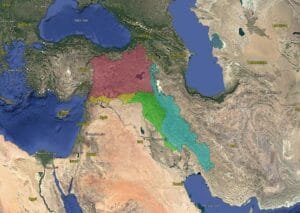
Figure 1. The Greater Kurdistan map
Water as State Policy: Dams, Displacement, and Control in Northern Kurdistan
The Tigris flows quietly past the ancient stones of Hasankeyf — or rather, it used to. Today, much of that historic town lies submerged beneath the waters of the Ilisu Dam reservoir. For the Kurdish families who lived there for generations, the flooding was not a natural disaster but a political one. “We buried our grandparents’ homes ourselves, because we knew the water was coming,” recalled one displaced resident in interviews documented by the Hasankeyf Coordination group. Tens of thousands of Kurdish villagers were forced from their lands with little compensation and scant notice.
Water policies in North Kurdistan have significant impacts on ecosystems and local communities. The Turkish government launched major hydroelectric and irrigation projects, especially via the Southeastern Anatolia Project (GAP), since the mid-20th century. These are criticized for having negative impacts on the environment, social structure, and politics, leading to the long-term destruction of ecosystems and affecting local Kurdish populations. The GAP involves 22 dams and 19 hydroelectric plants on the Euphrates and Tigris rivers, designed to provide irrigation and hydroelectric power mainly for western Turkey. These projects have caused flooding of valleys and wetlands, disruption of river ecosystems, forced displacement of more than 78,000 Kurdish villagers, and loss of historic sites like Hasankeyf.
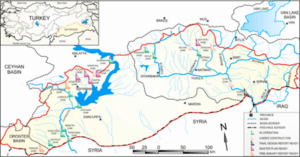
Figure 2. Location map and details of the GAP project. Resource: https://www.sciencedirect.com/science/article/pii/S2352484716300166
The Turkish government resorts to water as a political arm, building dams on cross-boundary rivers and controlling the flow towards Syria and Iraq, impeding their ecosystems and threatening their livelihoods. Water projects have displaced communities, particularly Kurdish communities, and pursued development plans in western Turkey that intensify regional water scarcity and conflict, adding to climate change vulnerability.
“We buried our grandparents’ homes ourselves, because we knew the water was coming.”
Lake Van: Pollution, Neglect, and the Cost of Development
Fishermen on the shores of Lake Van have noticed the change over the past two decades: the nets come up emptier, the water carries an unfamiliar smell after rains, and the foam that gathers along the shoreline now lingers for days. For the Kurdish communities who have depended on the lake for their livelihoods and drinking water for centuries, the deterioration of Lake Van is not an abstract environmental concern — it is a daily reality.
Lake Van is Türkiye’s largest saline and soda lake, exposed to serious environmental problems originating from human activities, poor policies, and neglect. Pollution comes from untreated wastewater and agricultural runoff, mainly from urban areas such as Van, which further deteriorates the lake’s water quality through eutrophication. This nutrient input spurs harmful algal blooms, harming aquatic life and threatening species such as Daphnia magna. Environmental problems at Lake Van reflect the wider issue in Kurdish regions, where state policies often prioritize development at the expense of environmental concerns. To address these issues, more stringent pollution controls, sustainable tourism practices, and community involvement in decision-making processes are essential.
Eastern Kurdistan (Iran): Dams, Depletion, and Environmental Collapse
In the villages along the Little Zab River, older farmers speak of a time when the waters ran clear and cold through summer, feeding fields of wheat and orchards of walnut trees. Today, many of those same stretches of riverbed run dry for months at a time. Younger generations are leaving — not by choice, but because there is simply not enough water left to sustain a life on the land.
The exploitation of water resources and dam construction in Iran has led to environmental and socio-economic problems. The construction of many dams, such as the Darian Dam, has affected aquatic ecosystems by preventing fish migration and flooding land. Additionally, conflicts over water rights have arisen between local communities. Most of the semi-arid areas of Kurdistan depend on rivers and groundwater for agriculture, domestic use, and hydroelectric power. However, intensive water management, including large dams, has caused environmental damage and changes in water systems.
As a result of the water policies of the Islamic Republic regime, the biodiversity of this region has suffered greatly, especially in the basins of rivers such as the Little Zab, Zarrineh Rood, Sirvan, and Zayandeh Rood. Groundwater levels have also decreased excessively because of indiscriminate well drilling. Irrigation projects and the cultivation of water-intensive crops have reduced river flows and shrunk wetlands such as those affected by the Garan Dam.
Lake Urmia: Ecocide in Plain Sight
Hossein, a retired schoolteacher from Urmia, remembers swimming in Lake Urmia as a boy in the 1970s. The water was warm, salty, and teeming with brine shrimp that turned the shallows a vivid orange-pink. Flamingos gathered in great flocks along the shore. Today, when Hossein returns to those same shores, he finds cracked salt flats stretching to the horizon, the water receded so far that it is barely visible. “It is like watching a person die slowly,” he said. “And nobody stopped it.”
The shrinkage and desiccation of Lake Urmia represent severe ecocide, highlighting the destructive impact of unsustainable practices and climate change. Once the largest saltwater lake in the Middle East, Lake Urmia has lost more than 80% of its surface area since the 1970s. This environmental crisis is mainly due to unsustainable human practices and climate change, showcasing ecocide, the harmful destruction of ecosystems that affects biodiversity and people’s health and livelihoods.
The lake crisis is due to water mismanagement and overuse. Many dams on the rivers supplying the lake have reduced the water inflow for agriculture and urban needs. In addition, excessive groundwater extraction and the growth of water-intensive crops have depleted the resources.
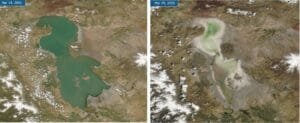
Figure 3. Change in the area of Lake Urmia between 2001 and 2023. Source: NASA; Shrinking Lake Urmia
As the lake dries up completely, vast salt plains will be formed. In this case, possible salt storms threaten the region’s health conditions and vegetation cover. The higher salinity has also made it difficult for many species to survive, leading to a collapse of the brine shrimp population, which affects migratory birds. Although government departments and organizations undertake restoration projects, weaknesses in policies and enforcement, as well as agricultural pressures, pose a significant hindrance. Solutions require an integrated water management approach.
“It is like watching a person die slowly. And nobody stopped it.” — Retired teacher from Tabriz, recalling Lake Urmia
Iraqi Kurdistan: Water Scarcity in a Downstream Reality
In Sulaymaniyah, the water cuts have become routine. Residents keep large plastic tanks on their rooftops, filling them during the hours when the municipal supply runs, unsure how long that supply will last. Farmers in the Darbandikhan basin have watched the reservoir levels sink year after year. “We used to plan for rain,” said one farmer near Halabja. “Now we plan for when there will be no rain, because that is the more likely situation.”
The availability of water in Iraqi Kurdistan shows signs of scarcity, mainly due to climate change, dam projects by upstream states, and improper local methods. The GAP project in Turkey has caused the water level of the Tigris River in Kurdistan and Iraq to drop sharply, affecting the water supply for the agricultural sector and drinking needs. Likewise, due to Iran’s dam-building activities, Dukan and Darbandikhan are severely affected, putting ecosystems at risk. Additionally, the reduction in water caused by industrial and household sources has exacerbated the crisis by adversely affecting water quality and public health.
Syrian Kurdistan: Extraction, Marginalization, and Water Deprivation
In the Hasakah region, where the Khabur River once sustained dense agricultural communities, many villages have been abandoned. Those who remain describe a slow but relentless dispossession — not through sudden violence, but through the gradual disappearance of the water that sustained their way of life. “My father’s generation grew cotton here,” said one woman from a village east of Qamishli. “My generation grows nothing. There is no water for it.”
Syrian Kurdistan’s water resources were heavily exploited for national agriculture and industrial needs. Extensive irrigation projects depleted local rivers and groundwater, impacting water availability for small-scale farmers and damaging both wetlands and broader ecosystems. The government’s failure to invest in water infrastructure in Kurdish-majority areas further exacerbated water depletion and salinization.
Notably, the construction of the Assad Dam on the Euphrates River in the 1970s redirected water away from northeastern Syria, including Kurdish regions, thereby affecting agriculture and the health of dependent ecosystems. Moreover, the extraction process in Rmelan and other areas has contaminated groundwater, making it no longer possible to use for drinking or irrigation. This has resulted in the desertification of cultivated lands, mainly in the Hasakah region. In 2021, the water level of the Euphrates River dropped to historic lows, affecting over 5 million people in Syria, including Rojava, as power generation and irrigation were critically impaired.
War on Water: Conflict, Infrastructure Destruction, and Survival
When fighting reached the outskirts of Qamishli in the early years of the Syrian conflict, the first thing many residents noticed — before the checkpoints, before the shortages of bread — was that the water stopped flowing. The pumping station had been hit. Families began walking long distances to collect water from whatever sources remained, often contaminated. Children fell ill. The disruption of water, it became clear, was not a side effect of the war but a weapon within it.
The destruction of water infrastructure exacerbated water scarcity in Syrian Kurdistan during the civil war. Pipelines, irrigation systems, and water treatment plants were damaged due to bombing and neglect. The Euphrates River, a critical water source for the region, experienced reduced flow because of both upstream damming by Turkey and local mismanagement amid the conflict. Villages in Hasakah and Qamishli faced acute water shortages, forcing reliance on contaminated wells.
Targeting Water: ISIS and Environmental Destruction as Strategy
Farmers returning to their lands after the defeat of ISIS in the Sinjar and Nineveh plains described a deliberate and systematic destruction. Orchards had been cut down. Irrigation channels had been filled with rubble. Water pumps had been destroyed or stolen. What had taken generations to build — the careful management of scarce water in an arid landscape — had been dismantled in a matter of months.
The ISIS militants typically attacked agricultural lands and irrigation infrastructures in an attempt to destabilize local economies and communities. Farmlands have been burned, irrigation systems destroyed, and crop yields diminished due to direct attacks and occupation-related mismanagement.
References
- Lara Arif, “In the Midst of the Riparians: Kurdistan’s position at the center of an impending water crisis in the Tigris-Euphrates River Basin,” Washington Kurdish Institute, (2023). https://dckurd.org/2023/02/15/kurdistans-position-at-the-center/
- Ahmad Othman, “Drying up of Euphrates River threatens living conditions in NE Syria,” North Press Agency, (2023). https://npasyria.com/en/105448/
- Alessandro Tinti, “Water Resources Management in the Kurdistan Region of Iraq; A Policy Report,” The Institute of Regional and International Studies (IRIS), (2017). https://shorturl.at/AB2oU
- Benjamin F. Zaitchik, Jason P. Evans, Roland A. Geerken, and Ronald B. Smith, “Climate and Vegetation in the Middle East: Interannual Variability and Drought Feedbacks,” Journal of Climate 20, no. 15 (2007): 3924–3941. https://doi.org/10.1175/JCLI4223.1
- Dawod Rasooli Keya, “Lake Urmia Crisis and Possible Solutions,” TISHK Center for Kurdistan Studies. Articles in Advance (2024). https://doi.org/10.17605/OSF.IO/KM5B8
- Hasankeyf Coordination, “Ilısu Dam and Hydroelectric Power Plant Project,” Criticism Report, (2019). www.hasankeyfgirisimi.net
- Mahmut Özdemirkol, “Evaluation of the Resettlement Process in Hasankeyf/Ilısu Dam in Terms of World Bank Recommendations,” Journal of Kent Akademisi, 16(4) (2023): 2734–2760. https://doi.org/10.35674/kent.1332549
- Mina Soudi, Hojjat Ahmadi, M. Yasi and S. A. Hamidi, “Sustainable restoration of the Urmia Lake: History, threats, opportunities and challenges,” European Water. 60: 341–347, (2017). https://www.ewra.net/ew/pdf/EW_2017_60_47.pdf
- Murat Türkeş, “Scientific Basis of Climate Change and Impacts on Turkey,” Bogazici University Center for Climate Change and Policy Studies, İstanbul, Turkey (2020). https://www.iklimin.org/wp-content/uploads/2020/02/modul_01_en.pdf
- Rasim Akman and Ataman Altug Atıcı, “Investigation of Bilge Water Source Pollution in Lake Van,” Journal of Yüzcüncü Yıl University Institute of Science, 27(2), (2022): 452–465. https://doi.org/10.53433/yyufbed.1058474
- Yousra Mohamed Khir Alla and Lee Liu, “Impacts of Dams on the Environment: A Review,” International Journal of Environment Agriculture and Biotechnology 6(1), (2021): 064–074. doi:10.22161/ijeab.61.9; Allan Hassaniyan and Mansour Sohrabi, “Colonial Management of Iranian Kurdistan; with Emphasis on Water Resources,” Journal of World-Systems Research, Vol. 28 Issue 2 (2022). DOI:10.5195/JWSR.2022.1081